
|
Every water delivery company promises convenience. The difference usually shows up after your first few deliveries. A driver misses the agreed window, an office runs out before the next stop, or a bill includes charges nobody explained during signup. Those details matter more than a photograph of a water cooler.
If you’re comparing bottled water delivery in St. Louis or Metro East Illinois, ask how the service will work at your actual address. A household in Belleville, a small office in Clayton, and a manufacturing facility in Edwardsville may need completely different arrangements. These ten questions will help you compare providers before committing to a regular water delivery service.
Ten Questions to Ask Before Choosing a Water Delivery Service
1. Do You Deliver to My Address, and How Often?
A company may advertise service across Greater St. Louis without running the same routes in every neighborhood. Ask the supplier to confirm your address and the delivery days available there. That matters whether you’re in Chesterfield, St. Charles, Collinsville, or O’Fallon, Illinois.
Find out whether you can choose weekly, every-other-week, or monthly deliveries, and whether the service works differently for homes and businesses. An advertised service radius tells you where a company operates. A confirmed route tells you when your water can actually arrive.
2. Can You Handle Our Order Size?
A family using a handful of bottles each month needs a different supplier arrangement from a facility receiving dozens in one stop. Ask about minimum quantities, the largest order the company can handle, and whether bottle counts can change as demand changes.
For an office, estimate usage from the number of people regularly on-site rather than total payroll. Manufacturing plants and warehouses should account for shifts and work conditions. The NIOSH workplace recommendations advise employers managing heat exposure to provide adequate cool drinking water near work areas. Heat-exposed workers need a separate supply plan from ordinary desk-based offices.
3. What Will the Delivery Actually Cost?
Ask for a quote showing what you pay for the water and what, if anything, is charged separately. A low advertised bottle price tells you little about the total bill if equipment, deposits, and deliveries are priced differently.
Before agreeing to service, clarify:
- Water: Price per bottle or agreed delivery quantity
- Delivery: Route fees or charges for extra stops, if any
- Equipment: Cooler rental, placement, or maintenance charges, if applicable
- Bottles: Deposits, return requirements, or missing-bottle fees, if applicable
Don’t assume every supplier uses these charges. Ask which ones apply to your specific quote, and get the billing terms in writing.
4. Where Does the Bottled Water Come From?
“Clean water” is a familiar sales promise. Ask the supplier what kind of bottled water it delivers, where it is sourced or bottled, and what quality information customers can review. If water is described as purified or spring water, ask what that description means for the product you’re buying.
The question is reasonable even when the water looks and tastes fine. In an April 2025 FDA report on PFAS testing, ten of 197 sampled bottled waters had detectable PFAS; none exceeded the EPA drinking-water limits used for comparison. That finding doesn’t describe any particular St. Louis brand, but it supports asking for specific product information instead of relying on vague purity claims.
5. Do You Supply Water Coolers and Maintain Them?
For an office or commercial facility, bottled water is only part of the setup. Ask whether the supplier provides a dispenser, which models are available, and who handles cleaning, routine upkeep, and repairs. A countertop cooler in a small Creve Coeur office may require a different arrangement from several units spread across a busy building.
Also check whether equipment is included in the quoted service or billed separately. Find out what happens if a cooler stops working, whether replacement units are available, and what responsibilities remain with your staff.
6. How Reliable Is the Delivery Schedule?
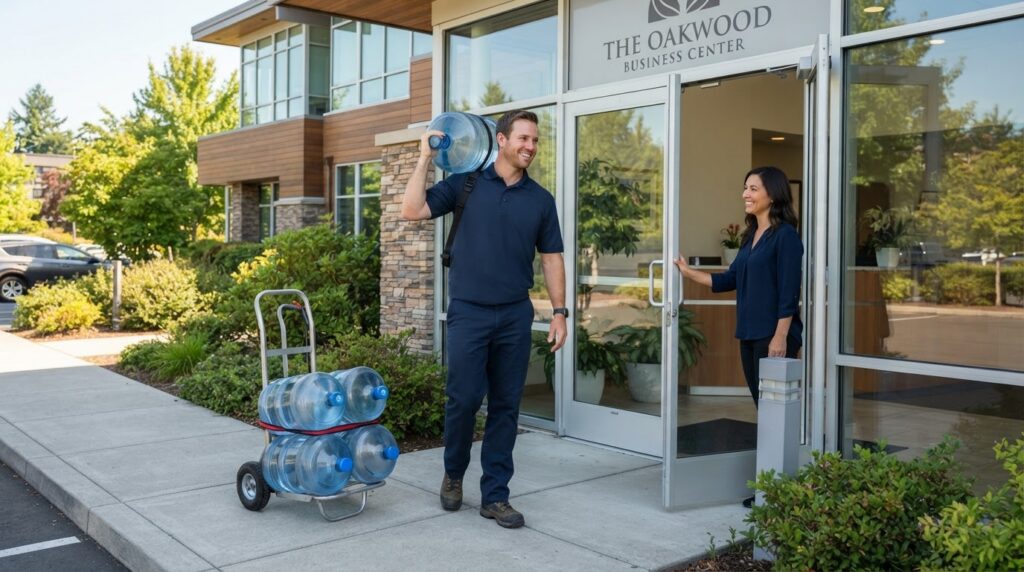
A promise of “regular deliveries” leaves plenty of questions unanswered. Ask whether the company agrees to a delivery day, how delivery windows are communicated, and what happens when traffic, weather, or route changes cause delays.
This is particularly relevant for hospitals, offices, and manufacturing facilities with controlled building access or shift changes. If your receiving area closes at 3 p.m., the supplier needs to know that before setting the schedule. Look for a company that explains how routes work and communicates when plans change, rather than one that simply promises perfect timing.
7. What Happens When We Need More Water?
Consumption rarely stays identical every month. A household may have visitors for a week. An office in St. Louis County may host training sessions. A warehouse might add another shift during a busy period.
Ask how much notice is needed to increase an order, skip a delivery, or request an extra stop. Find out whether urgent deliveries are offered and whether they depend on route availability. For larger workplaces, it’s also worth asking whether the supplier can accommodate temporary increases without forcing a permanent change to the regular order.
8. Who Picks Up the Empty Bottles?
Reusable three- and five-gallon bottles can reduce the number of single-use containers you handle, but you still need a workable return process. Ask whether drivers collect empty bottles during scheduled deliveries and where those bottles should be stored beforehand.
For an office with limited storage, full and empty bottles can quickly compete for the same floor space. Clarify how returns are tracked and whether deposits or fees apply to bottles that are damaged or unreturned. This is particularly worth discussing before arranging deliveries to several departments or floors.
9. Are There Contracts or Cancellation Fees?
A recurring delivery can be convenient, but the terms should be clear before you enroll. Ask whether there’s a minimum service period, how often you’re billed, and what you need to do to pause or cancel deliveries.
The Federal Trade Commission’s March 2026 discussion of recurring-service arrangements specifically uses bottled water delivery as an example of a continuity plan. The FTC identifies unclear charges and difficult cancellation processes as potential consumer problems. Read the supplier’s actual terms instead of assuming every recurring service operates alike.
10. Who Answers When Something Goes Wrong?
A missed delivery is frustrating. Having nobody to call makes it worse. Ask how customers reach the delivery team, who handles order changes, and whether there’s a clear contact for problems involving invoices, equipment, or route timing.
Read recent reviews with those questions in mind. A review describing how a company handled a schedule change may tell you more than a vague five-star rating. For business accounts in Metro East communities such as Belleville and Glen Carbon, responsive communication can be especially valuable when several people depend on the same water supply.
Compare Water Delivery Companies With Your Needs in Mind
Before contacting suppliers, write down your delivery address, estimated monthly bottle count, preferred frequency, number of water stations, and any access restrictions. Share the same information with each company so you’re comparing quotes and service arrangements on equal terms.
Honest Water provides bottled water delivery across St. Louis and Metro East Illinois, including three- and five-gallon bottles, scheduled residential routes, and office and commercial delivery for larger facilities. We offer commercial coolers, flexible order adjustments, and no long-term water delivery contracts. Pricing and route availability are confirmed based on your requirements.
Tell us where you need water and roughly how much you use. We’ll help you discuss a delivery schedule and bottle quantity that fit your home or workplace. Contact Honest Water to get started.